
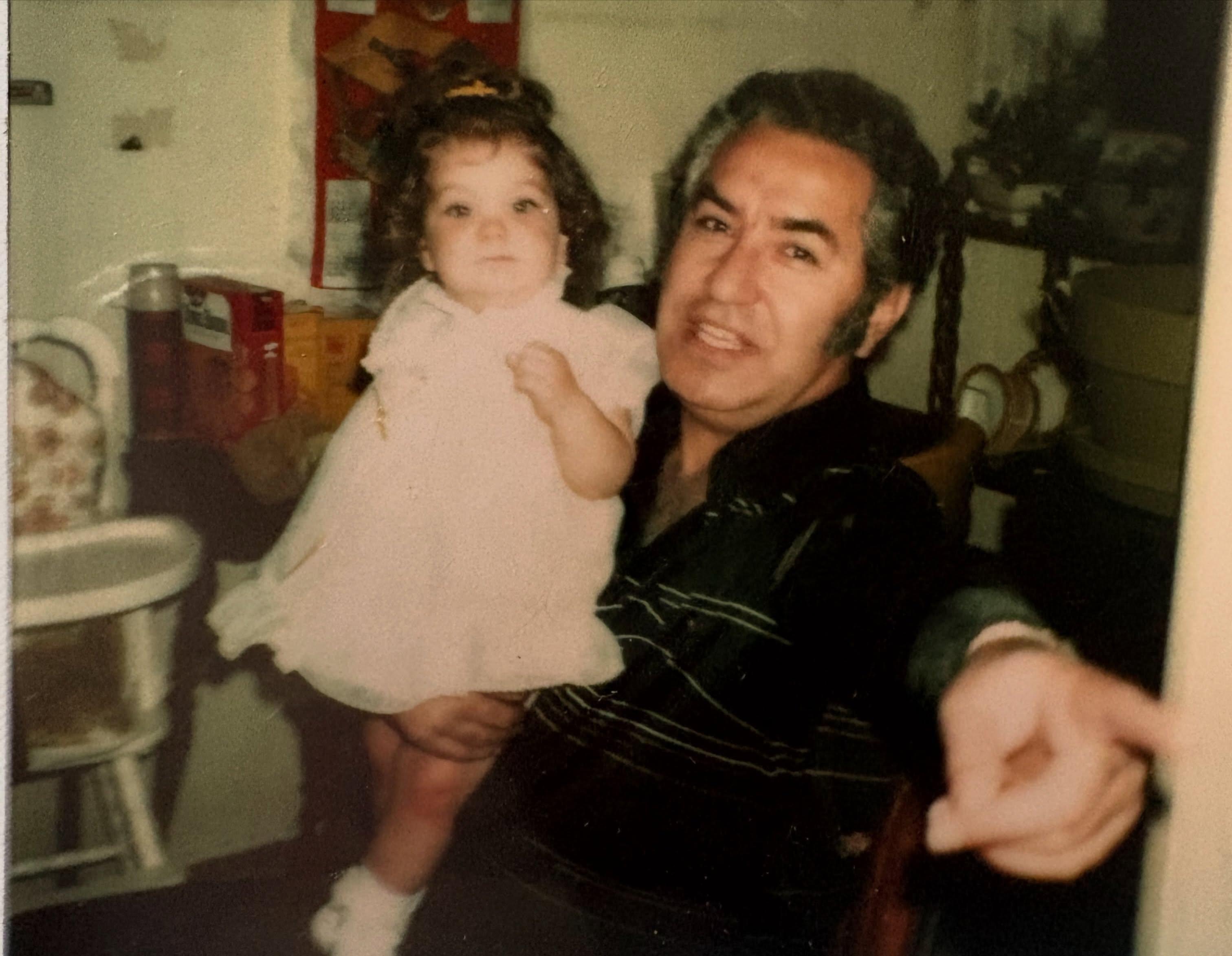
Ep. 303: I Found My Dad's Lost Story
My dad died last week. He was 97. Nine years earlier, dementia had already taken the version of him who could sit down and tell a story start to finish, so I thought I'd already lost that. Then I remembered a recording I made of him back in 2012, before I had a podcast, before I even knew what a podcast was, and I spent a week wondering if the file still existed.
It did. It was the first thing I opened when I put the SD card in my computer. This week's episode of Culture Changers is that recording: my father, Milad Rizk, telling his entire life story in his own words, from a village outside Tripoli, Lebanon to raising six kids across three American cities.
Who he was
Milad Rizk was born in Tripoli in 1928. His mother named him Milad, which means Christmas in Arabic, because she was told he'd arrived on Christmas Day. He grew up watching his father run a soap factory after quitting a monastery he'd joined as a young man. He survived World War Two as a kid, skipped three grades of school because his family could only afford to keep one child enrolled at a time, and left Lebanon at 29 with a Lebanese passport and no money, chasing what he called the promised land.
He spent the next several decades as an international auditor, working across Iraq, Saudi Arabia, Chicago, Paris, and New York. He married twice, raised six kids, picked up hitchhikers with all of us crammed in the car, and by his own account near the end of his life, worked himself half to death doing it.
I recorded this interview with him in January 2012. I wasn't thinking about dementia or mortality. I had a little recorder I used to interview musicians for a blog, and I thought, why not turn it on my dad instead.
Growing up poor in Tripoli during the war
He talks about walking to school past the soap factory his father ran, about his neighborhood's version of dating (which was mostly walking past girls at other churches and hoping one of them smiled), and about how a scholarship for being the top student in his class changed the entire direction of his life.
Leaving Lebanon for the promised land
He describes what America looked like from the outside before he ever set foot here, and admits he spent his first few months in the States comparing everything unfavorably to Lebanon before he got smart and stopped.
The cost of being a workaholic
This is the part of the interview I keep coming back to. I asked him if working that hard was worth it. He said no. He told me he wanted to retire at 42, and instead worked harder every year after that. He says plainly that he wasn't there for us when we needed him, and calls it his biggest regret.
His philosophy on marriage, and where I push back
My dad had strong, old-school opinions about what women owe their husbands. I didn't let that slide in 2012, and it's one of my favorite exchanges in the whole interview.
Whether he thinks he was a good father
Near the end I ask him directly. His answer isn't what I expected, and it's the reason I think everyone should ask their own parents this question while they still can.
Quotes I keep thinking about
“Whenever I say I love you, I mean it. Because I can't lie.”
“The one thing I can never accept is lying from anybody.”
“It wasn't worth it. I wanted to retire at forty-two. And after forty-two, every year I worked harder than before.”
“What you need most is affection and time, which I didn't give you enough of. I blame myself for that.”
If you still have a parent who'd sit down and talk to you, this is your nudge. Record it. You don't know yet which conversation is going to be the one you need back.
Listen to the full episode, “I Found My Dad's Lost Story,” wherever you get your podcasts.

Allison Hare's Links
Schedule a FREE podcast clarity call with me- Your future audience is out there. Talk to them!
DOWNLOAD the free podcast equipment guide- No guesswork, no google rabbit holes, start recording today
Feedback and Contact:: [email protected]