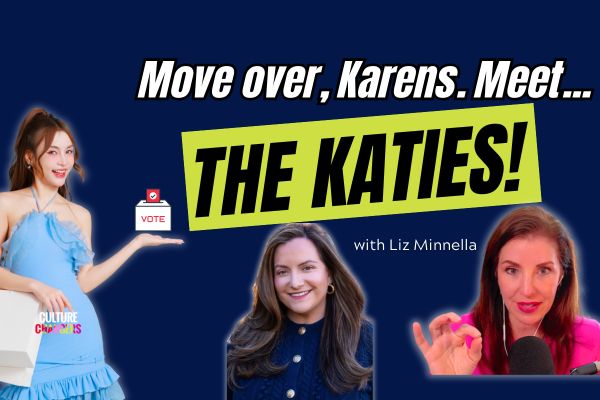
Ep. 286 - Move Over Karens! The Katies are making the moves!
How Social Media Influences Elections (And Why Influencers Matter More Than You Think)
If you still believe elections are won on debate stages, cable news panels, or door-knocking campaigns, you’re missing the real battlefield. The bigger story is how social media influences elections — and not in the loud, obvious way most people assume. It’s not always the political commentators. It’s often the lifestyle influencer baking sourdough, linking a dress, or sharing a family update who ends up shifting opinions in ways campaigns can’t.
In this episode, I sat down with political strategist Liz Minnella to unpack how digital culture drives political change. We talked about apolitical influencers, parasocial trust, online persuasion research, and why traditional voter outreach strategies are losing power. If you’ve ever wondered whether Instagram, TikTok, or YouTube actually move votes, the answer is yes — and the mechanics are fascinating.
Here’s what’s really happening.
The Real Battlefield Is Online
One of Liz’s core arguments is simple: campaigns are fighting the wrong war.
Traditional tactics like door knocking and phone banking still exist, but voter persuasion increasingly happens online. Algorithms shape what people see. Influencers shape how people feel about what they see. And feelings drive behavior.
Understanding how social media influences elections requires recognizing two parallel worlds:
The physical campaign world: rallies, ads, canvassing
The digital world: feeds, comments, shares, and creator trust
According to Liz, the second world now shapes culture — and culture shapes political outcomes. If your strategy ignores online persuasion, you’re missing where belief systems are formed and reinforced daily.
Why Apolitical Influencers Are So Persuasive
One of the most surprising insights from the episode is this: creators who rarely talk about politics can be more persuasive than political influencers when they do speak up.
Research Liz references from Harvard and Columbia found that nonpolitical lifestyle creators were three times more likely to influence opinion shifts compared to explicitly political creators. Why?
Because of trust.
Lifestyle influencers build parasocial relationships. They share everyday life, parenting struggles, recipes, product recommendations. Followers don’t experience them as commentators. They experience them as friends.
People resist being sold to. They don’t resist advice from someone they trust.
So when a lifestyle influencer suddenly speaks about a moral or political issue, it carries weight. That’s one of the clearest examples of how social media influences elections at a behavioral level.
Permission Structures and Mindset Shifts
Another powerful concept discussed is “permission structures.”
A permission structure is the social cue that tells someone it’s safe to change their mind. When someone in your feed — especially someone you identify with — publicly rethinks a stance, it lowers the psychological cost of reconsidering your own.
This matters enormously during election cycles.
Instead of focusing solely on persuading people with facts, digital organizing increasingly focuses on shaping the narrative environment. If people see:
“It’s okay to change your mind.”
“Others are rethinking their vote.”
“You’re not alone in questioning this.”
They’re more likely to reconsider their own position.
This subtle social signaling is a major way how social media influences elections beyond traditional messaging.
Culture Moves Faster Than Policy
Campaigns often focus on policy arguments. Social media moves culture.
Culture spreads through:
Memes
Commentary
Influencer posts
Viral clips
Pop culture moments
When cultural dominance shifts, political outcomes often follow. Liz argues that the side winning online narrative momentum — humor, virality, relatability — often shapes broader political momentum.
That doesn’t mean celebrities alone decide elections. It means cultural relevance shapes who feels mainstream and who feels fringe.
Understanding how social media influences elections means recognizing that persuasion is emotional before it’s logical. Culture builds emotional alignment. Policy follows.
Why “Don’t Dunk” Matters in Digital Persuasion
One of the most practical takeaways from the episode is strategic restraint.
When someone changes their political stance, the instinct to say “I told you so” can be strong. But from a persuasion perspective, that reaction pushes people back out of the conversation.
If social media is shaping elections through social belonging, then ridicule breaks belonging.
Digital persuasion works best when:
People feel welcomed, not shamed
Conversations stay open
Bridges remain intact
The long game of influence requires interpersonal discipline. That’s especially true in an environment where algorithms amplify outrage and reward conflict.
The Bigger Pattern: Algorithms Shape Reality
Perhaps the most important takeaway is this: the internet doesn’t just reflect reality. It shapes it.
When people see certain narratives repeated — whether about economic fear, cultural decline, or political corruption — those narratives become emotionally real.
The feedback loop works like this:
Content circulates online.
It influences belief and behavior.
Behavior influences policy and elections.
Those outcomes generate more online content.
This loop is central to understanding how social media influences elections at scale.
The question is no longer whether social platforms matter. The question is who is shaping the narrative environment — and how effectively.
FAQs
1. How does social media influence elections?
Social media influences elections by shaping public opinion, amplifying narratives, and leveraging trusted influencers who impact voter beliefs. Algorithms determine exposure, while creator trust affects persuasion.
2. Are lifestyle influencers really more persuasive than political influencers?
Research suggests that apolitical lifestyle influencers can be more persuasive when they speak on political issues because their audiences perceive them as trusted peers rather than partisan commentators.
3. Does online persuasion matter more than traditional campaigning?
While traditional methods still play a role, digital persuasion increasingly drives mindset shifts, especially among younger and suburban voters who consume political information primarily through social media platforms.
Social media is not just where conversations happen. It’s where culture forms. And culture, over time, shapes elections.
If you want the full breakdown — including real-world organizing examples, research insights, and the psychology behind online persuasion — listen to the complete episode.—---------------------------------------------------------
To Connect With Liz:
Instagram: https://www.instagram.com/lizaminnella/
Substack: https://substack.com/@lizaminnella
To Connect With Me:
Instagram: https://www.instagram.com/allison__hare
LinkedIn: https://www.linkedin.com/in/allisonhare/
Website:https://allisonhare.com
Book a free podcast clarity call with Allison: https://allisonhare.com/freecall
Prefer watching on YouTube?
Allison Hare's Links
Be sure to rate, review, and follow this podcast on your player and also, connect with me IRL for more goodness and life-changing stuff.
Schedule a FREE podcast clarity call with me - Your future audience is out there. Talk to them!
DOWNLOAD the free podcast equipment guide- No guesswork, no google rabbit holes, start recording today
Feedback and Contact:: [email protected]